
Plain-English answers, side-by-side comparisons and guides to every loan program, written and reviewed by Jack Gladden.
Compare loans
 DSCR vs conventional investment loansBoth finance rental property. A conventional loan qualifies you on your income and usually costs less; a DSCR loan qualifies the property on its rent and asks less about you.
 Bank statement vs profit and loss loansBoth let self-employed borrowers qualify without using tax returns. A bank statement loan counts your deposits; a P&L loan uses a profit and loss statement, usually prepared by a CPA or tax preparer.
 HELOC vs cash-out refinanceBoth turn home equity into cash. A cash-out refinance replaces your mortgage with a larger one; a HELOC sits behind the mortgage you have, so your current rate stays put.
 Jumbo vs conforming loansThe difference is the county loan limit. A conforming loan is at or under it and follows Fannie Mae and Freddie Mac rules; a jumbo loan is above it and follows each lender’s own rules.
 FHA vs conventional loansBoth are popular for buyers with a smaller down payment. FHA is more forgiving on credit; conventional is usually cheaper for stronger credit, and its mortgage insurance can come off.
 ARM vs fixed-rate mortgageA fixed rate never changes. An adjustable-rate mortgage starts lower for a set period, then moves with the market within caps. The question is how long you’ll keep the loan and whether you can afford the worst case.
 FHA vs VA loansBoth are government-backed loans for a home you live in. If you have VA eligibility, the VA loan usually wins on cost; FHA is the option for everyone else, and for some veterans whose entitlement is tied up.
 VA vs conventional loansA VA loan is usually the better deal for an eligible buyer, but not always. A conventional loan can come out ahead with a large down payment, for a second home or rental, or when a seller is wary of VA terms.
 USDA vs FHA loansBoth help buyers with modest savings. USDA usually costs less but only works in eligible areas and under an income limit; FHA works anywhere, for any income.
 15-year vs 30-year mortgageThe shorter loan usually costs less interest; the longer one costs less each month and leaves room in your budget. A 30-year loan with extra payments sits in between.
 Home equity loan vs HELOCBoth let you borrow against your home and keep your first mortgage. A home equity loan pays a lump sum at a fixed rate; a HELOC is a line of credit you draw on as you need it, usually at a variable rate.
 Reverse mortgage vs HELOCBoth turn home equity into cash. A HELOC needs monthly payments and an income that qualifies; a reverse mortgage, for homeowners 62 and older, needs no monthly mortgage payment (taxes, insurance and upkeep still apply), and the balance is repaid when you sell or move.
 Bridge loan vs HELOC to buy before you sellBoth use the equity in your current home to fund the next one. A HELOC usually costs less but has to be in place before you list; a bridge loan costs more but is built for exactly this, and is paid off when your home sells.
 FHA 203(k) vs HomeStyle renovation loansBoth roll the purchase or refinance and the renovation into one loan, based on the home’s value after the work. FHA 203(k) is more forgiving on credit; HomeStyle allows more kinds of property and work.
 DSCR vs hard money loansThey do different jobs. A hard money loan buys and fixes a property fast and is meant to be repaid within months; a DSCR loan is long-term financing for a property that rents. Many investors use both, one after the other.
 Bank statement vs 1099 loansBoth qualify self-employed borrowers without the net income on tax returns. A bank statement loan reads your deposits; a 1099 loan reads the 1099 forms your clients send you.
 Foreign national vs ITIN loansBoth finance buyers without a Social Security number. A foreign national loan is for people who live abroad; an ITIN loan is for people who live and pay taxes in the United States.
 Warrantable vs non-warrantable condosA warrantable condo is in a building that meets Fannie Mae and Freddie Mac’s rules, so standard loans work. A non-warrantable one doesn’t, often for a reason that has nothing to do with your unit, and needs a specialist lender.
 Co-op vs condo financingWith a condo you own your unit as real estate. With a co-op you own shares in a corporation that owns the building, and the loan is a share loan, which fewer lenders make and the board must approve.
 Chattel loan vs mortgage for a manufactured homeHow a manufactured home is titled decides how it’s financed. A home on land you own, on a permanent foundation and titled as real property, can get a regular mortgage; a home in a park or on leased land usually needs a chattel loan.
 Pre-qualification vs pre-approvalA pre-qualification is an estimate from what you tell a lender. A pre-approval is based on your documents and credit, and it’s what sellers want to see with an offer.
 Mortgage broker vs bankA bank lends its own money on its own programs. A broker compares many lenders for you and takes the loan to the one that fits. Neither is always cheaper, and the cost of each is shown the same way, on the Loan Estimate.
 Interest-only vs amortizing DSCR loansAn interest-only DSCR loan has a lower payment for its first years, which raises the property’s coverage ratio and its cash flow. An amortizing loan costs more each month but pays the balance down from the start.
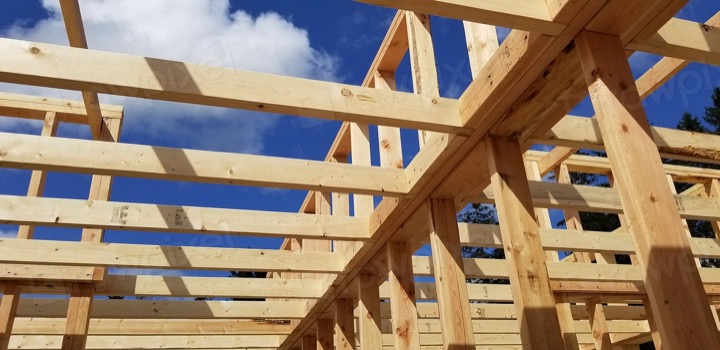 One-time vs two-time close construction loansA one-time close loan covers the build and the long-term mortgage with a single approval and closing. A two-time close uses a construction loan first, then a separate mortgage when the home is finished.
 Discount points vs lender creditsThey are two ends of the same scale. Points cost money upfront to lower the rate; a lender credit pays some of your costs in exchange for a higher rate. How long you keep the loan decides which comes out ahead.
 Qualified mortgage vs non-QM loansMost home loans are qualified mortgages, built to federal rules on documents, debt and loan features. Non-QM loans fall outside those rules on purpose, to serve borrowers whose income or situation the standard rules miss.
Guides
- Mortgage FAQ34 questions answered plainly, from first-time buyers to investors
 Refinance out of a hard-money or bridge loanHard-money and bridge loans are built to be short. When yours is coming due, a refinance into a long-term loan pays it off, lowers your cost and can take cash out if the property is worth more now.
 Behind on your mortgage: what happens and where to get helpFalling behind is more common than people think, and there is more time and more help than most expect. Federal rules give you time before foreclosure can start, and a free housing counselor can walk you through your options.
- Property tax and insurance ratesTypical rates for every state, and every county in Arizona, California, Florida and Ohio
- Today’s average mortgage ratesNational averages, and how to read an advertised rate
- Mortgage glossary56 mortgage terms in plain English
Loans by state
- Mortgage loans in CaliforniaLimits, programs, closing costs and rules in California
- Mortgage loans in ArizonaLimits, programs, closing costs and rules in Arizona
- Mortgage loans in FloridaLimits, programs, closing costs and rules in Florida
- Mortgage loans in OhioLimits, programs, closing costs and rules in Ohio
Investing outside these four states? Business-purpose loans for investment property, such as DSCR, bridge and fix-and-flip loans, are available in every state.
Traditional loan guides
- Conventional
- FHA
- VA
- USDA
- Jumbo
- First-time buyers & down payment help
- Adjustable-rate (ARM)
- Refinance
- Cash-out refinance
- Renovation
- Cash-backed offers
- Reverse mortgage
Specialty program guides
- DSCR & investor
- Self-employed & bank statement
- Foreign national & ITIN
- Hard-to-finance condos
- Condotel & short-term rental
- Construction & bridge
- Rehab & code cases
- Second mortgage & HELOC
- Care homes
- Co-ops
- Manufactured homes
- Rural & acreage
